Loss Aversion + Opportunity Cost - using mental models to try and make better decisions
Loss aversion bias essentially describes us as humans to feel the thought of losing something to be twice as detrimental as any positive from a gain. It is the leading cause as to why I haven't bought a coffee machine yet. Or the new Nintendo Switch 2. Or that jacket that I passed by while walking to work that I really liked. Opportunity cost is all the happiness that those things could've given me.
One day at work my manager and I were talking about coffee, as people who have no work do. He likes flat white and I like my oat latte (yes, basic). We talked about how we like our coffees, the different texture of the milks and then eventually landed on the topic of buying coffee machines. He mentioned that he has a coffee machine at home that makes coffee of similar quality to what can be bought near our office. Granted, the competition (in his words) wasn't particularly tough, but to compare yourself to a professional is not a small claim.
He showed me the coffee machine and coffee bean grinder he has at home. $500 for the coffee machine and $200 for the grinder - I baulked. That's $700 upfront for a couple of machines, not even including the milk or coffee itself. Milk and coffee is currently all I am spending at home when I have coffee. It's not super nice but if you get decent milk then it tastes decent. He always tries to sell me on this sort of stuff, saying that he is trying to enjoy the little things that make life worth it. I think that's a good way to approach life. Practicing appreciation is something I've been trying to get better at.
However. I've always been someone who doesn't particularly like spending a lot of money. If I want to buy something and it costs more than $100, like a nice jacket, then I usually spend a couple of days thinking about it. For the coffee machine though, it can actually earn its cost back, unlike clothes. If you drink coffee everyday and it costs $1 to make a coffee at home whereas it costs $5 outside (yes, I will lowball the average price since my small oat latte costs $4.5) then you would've broken even in about 180 days - half a year. Sounds good in my mind, but emotionally it is so hard to justify that $700. I don't drink coffee every day and if I do then I just have one.
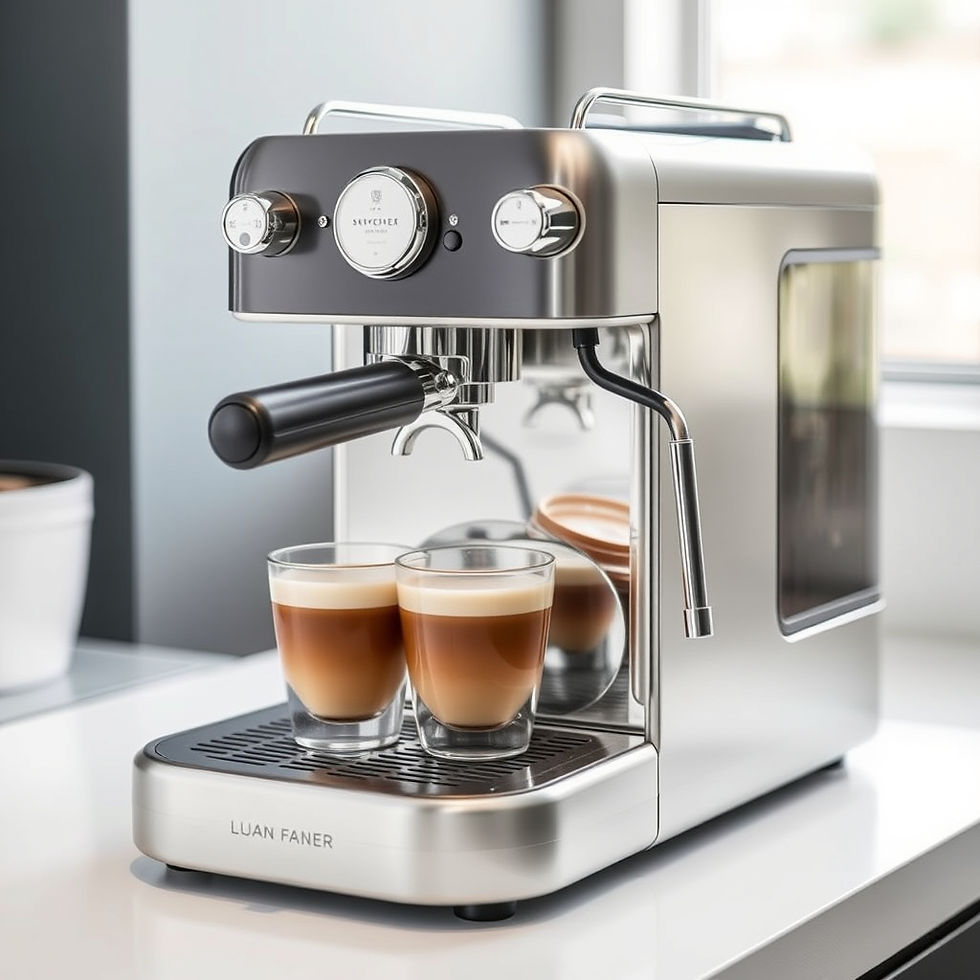
*Image has been generated with AI
I have been trying to figure out how to approach this sort of situation in a way that tricks my brain into being happy (and thereby deciding faster) to buy the coffee machine. One day, as I was listening to a set of videos that described Charlie Mungers mental models while washing the dishes, I realised that I was being impacted with the loss aversion bias. The cost of $700 in this economy? I didn't want to make a nosedive of a payment like that when the resources available to me are so uncertain. However, it was only several dishes and a few more completed videos later that I also heard the Opportunity Cost mental model and realised that I am losing something much more important. Investopedia describes opportunity cost as "the desirable benefits someone foregoes by choosing one alternative instead of another." By not choosing to buy the coffee machine (which would've broken even at some point anyway) and dwelling on it, I am choosing gain nothing and even to lose precious time thinking about the what-if, when that time could've been spent doing other things that bring me joy. Like drinking coffee. I still haven't bought that coffee machine because I don't drink that much coffee. However, I have become aware of what sort of person I am. Since the day I realised this, I've actively chosen to not dwell on certain things for too long, whether that's purchases I never made or experiences I haven't done. I've also used my time more efficiently - I've studied to get a new professional certification, gamed to take my mind off things more intentionally and joyfully, and spent time learning about the different jobs I've always been interested in, instead of wasting away time thinking about the what-if. I don't regret not buying that coffee machine, and I don't regret my time spent thinking and dwelling on it, because it led me to realise and understand what I do now. I know these sorts of short-term habits and thinkings come and go, but I have no problem with that if I spend my time doing something else that interests me. Plus, I've written it all here so that when I turn back into my default setting of experiencing loss-aversion bias on the daily, I can come back and read this. I hope you get something out of this that can help you live a more fulfilling life.



Not to mention the amount of money you'd be spending on quality coffee beans and milk. Plus if you're someone like me who enjoys efficient and non-time consuming ways to make coffee, you could argue there is the cost of time of making the coffee, learning how to make the coffee, washing the machine, and duly taking care of said machine. I also really liked how you tied this back to loss aversion and opportunity cost. A very simple example but it actually captures that internal decision making process so well, of hesitating on things not just because of the cost itself but because of how we feel about the loss. Great post! Really thoughtful and relatable.